Sales Quote Parts Quote Contact Us
Gulf Electroquip
Gulf Electroquip Celebrates 53 Years

Gulf Electroquip Ltd

425 North Wayside Drive

Houston TX 77020

Phone 713-675-2525

Fax 713-675-6433

sales@gulfelectroquip.com

Contact Gulf Electroquip Authorized Drilling Motor Service Center

GEQ Remanufacturing

Oil & gas engineering, purchasing and quality assurance departments weigh this question using reliability, cost and environmental conditions as guides.

Typically, drilling equipment components – which are the most expensive purchased brand new – can be repaired or remanufactured. Other equipment with high wear rates tend to be replaced with brand new.

When it comes to brand new vs. remanufactured components, whoever responds the quickest and offers the best quality and reliability wins, according to many in the oil & gas supply community. Though initial cost is still a main factor in the purchasing process, the real challenge for suppliers is lowering the cost of product ownership. Reliability and productivity over time, even at a higher initial cost, is becoming more important.

The path to determining life-cycle cost of brand new vs. remanufactured components is not clearly defined. It is dependent upon the type of component and its application. Although prices are readily available, specific reliability data is not. Purchasers must rely on supplier performance statistics and the recommendation of other drilling industry to judge their decisions.

GETTING TO THE CORE

Just about any component on a drilling rig can be remanufactured. Many remanufactured components are standard. Typically, drilling equipment components – which are the most expensive purchased brand new – can be repaired or remanufactured. Other equipment with high wear rates tend to be replaced with brand new.

Motor and AC generator manufacturer GE sets minimum standards for remanufactured components. Remanufactured motors must comply with strict specifications and be remanufactured using quality processes at facilities certified by ABS, DNV, Lloyd’s with a quality assurance specification. All components must be replaced in-kind or upgraded, although the specific component does not require that it be brand new, remanufactured or repaired.

Remanufacturing, which can save drilling contractors up to 30% of the cost of buying brand new, brings components up to OEM or like-new standards. In some instances there are more check points and gauges on remanufactured components than on brand new.

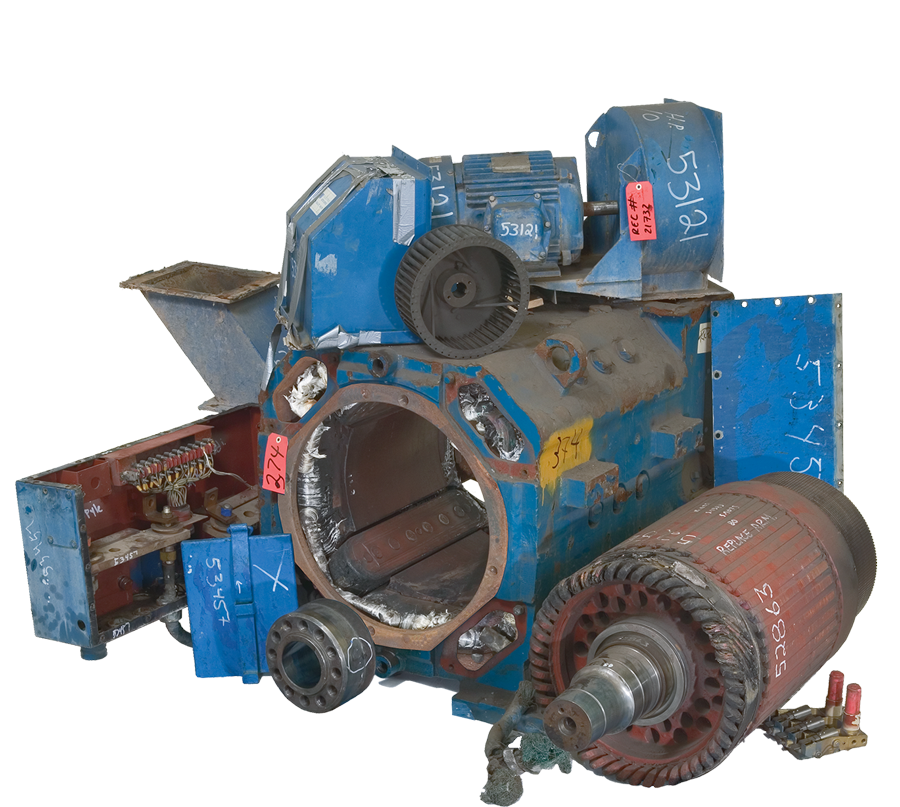
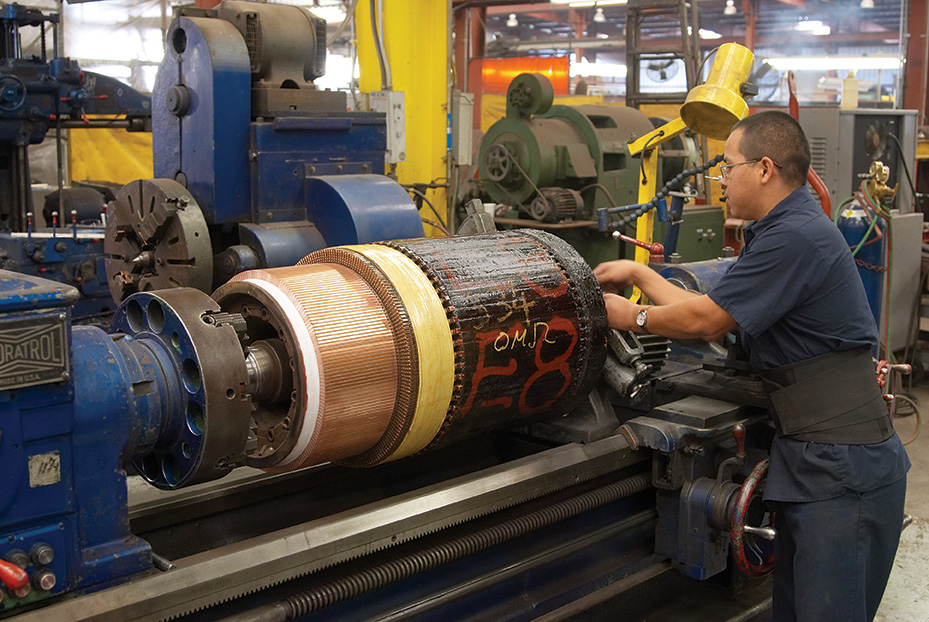
How can a remanufactured part be “as good as brand new” if it is 20 to 30 years old? Not everything in a remanufactured component is used. Motor bodies are recycled, while such internal components as rotors and stators are changed out with new ones for increased strength and reliability.

Recycling a component’s frame is common practice. Not only do drilling contractors save on the cost of buying brand new, but they only pay for the remanufacturing service. Drilling contractors and suppliers set up unit exchange programs so that when a component breaks down, the drilling contractor can send it to the supplier for repair while the drilling contractor replaces it with an in-stock remanufactured component. A part core inventory or pool allows drilling contractor to minimize equipment downtime.

THE COST FACTOR

There is increasing pressure to reduce cost in the oil & gas drilling business, which keeps managers looking at every component. Deciding how to purchase, the first cut is by cost comparison. The company agrees on a purchase price based on the quality specification, and have found that rebuilding [components] is generally more cost effective. There is a long-standing practice to rebuild traction motors and AC generators since the core, normally, is adequate to be rebuilt. Some components can be reused and sent back out into the field.

What gauge do drilling contractors use to determine a reasonable remanufacturing price? If the cost of a remanufactured component is 65% or more than the cost of a brand new one, drilling contractors generally buy brand new. When looking at price alone, drilling contractors engineering, quality assurance, and purchasing departments also take into account such hidden costs as delivery, handling, volume discount, and warranties.

Drilling contractors must consider transportation costs from the point of removal to the remanufacturer and back again. Drilling motors, which generally weigh 6,000 pounds, are expensive to transport, so buying brand new can make sense. However, long delivery schedules waiting for brand new may outweigh the cost of shipping. Depending on how long delivery will take, a drilling contractor may actually pay more for a component – brand new or remanufactured – that is ready sooner.

The real focus today and for the future is product reliability. Drilling contractors are running on short time lines, so they have to be absolutely sure that components will operate properly. An unforecasted failure in a drilling motor is more devastating now than in the past.

Risk analysis is a necessary part of the decision-making process. What is the risk of a remanufactured component’s failure over that of a brand new component? Does the present cost offset future costs? This is where life-cycle costs come into play.

SERVICE FACTORS

Selection is also based on a part’s service environment. With the increase in loads, components must be beefed up to withstand tougher conditions.

There is a big difference between a remanufactured drilling motor going back on a land rig mud pump that is used 10 times a year, and one that’s used on an offshore


RECENT STUDY PROVES
REMANUFACTURING SAVES

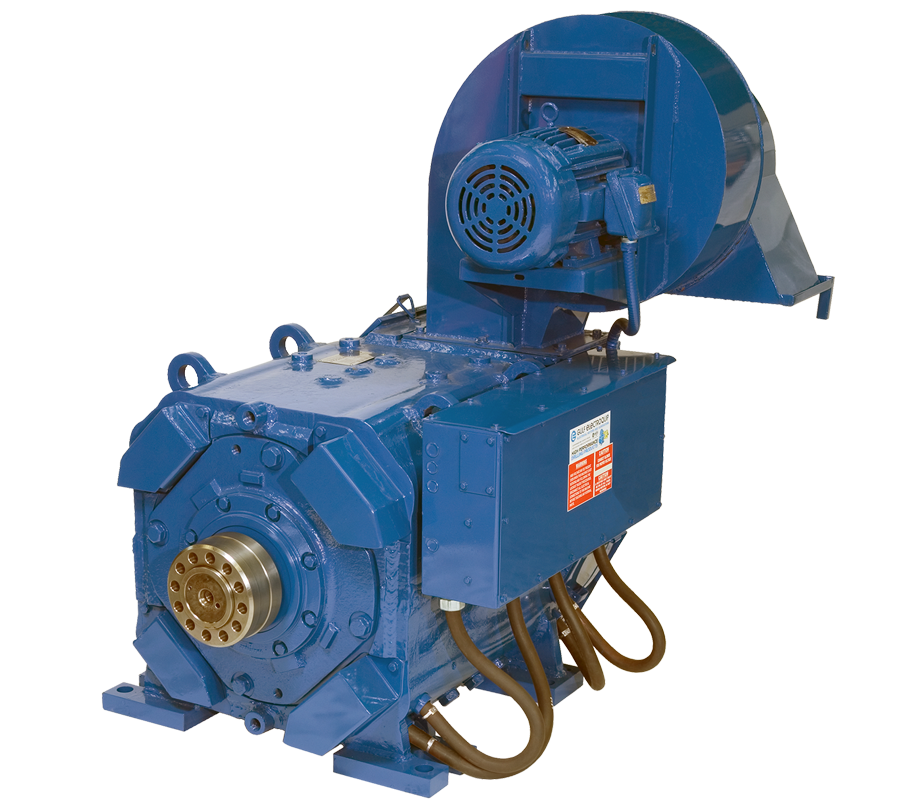
Remanufacturing restores used drilling motors to like-new condition, providing motors that are functionally equivalent to a new motor at much lower environmental and economic costs than the manufacture of a brand new motor. Here’s a study that proves remanufacturing saves:

EXAMPLE: A life-cycle assessment (LCA) model was developed to investigate the energy savings and pollution prevention that are achieved in the United States through remanufacturing a mid-sized automotive gasoline engine compared to an original equipment manufacturer manufacturing a brand new one. A typical full-service machine shop, which is representative of 55% of the engine remanufacturers in the United States, was inventoried, and three scenarios for part replacement were analyzed. The life-cycle model showed that the remanufactured engine could be produced with 68% to 83% less energy and 73% to 87% fewer carbon dioxide emissions. The life-cycle model showed significant savings for other air emissions as well, with 48% to 88% carbon monoxide (CO) reductions, 72% to 85% nitrogen oxide (NOx) reductions, 71% to 84% sulfur oxide (SOx) reductions, and 50% to 61% nonmethane hydrocarbon reductions. Raw material consumption was reduced by 26% to 90%, and solid waste generation was reduced by 65% to 88%. The comparison of environmental burdens is accompanied by an economic survey of suppliers of brand new and remanufactured automotive engines showing a price difference for the consumer of between 30% and 53% for the remanufactured engine, with the greatest savings realized when the remanufactured engine is purchased directly from the remanufacturer.

drilling rig. Premium remanufactured bearings that eliminate all defects and provide longer service life are more expensive, but in the long run more cost effective. It is up to the drilling contractor, however, to make the final cost determination.

Sometimes a drilling contractor may not want to invest in longer-life components if it is refurbishing a rig for a specific project with a limited time span. Minimum standard components would be acceptable in this situation. An analogy is buying a used car. If a drilling contractor plans on using a component for 10 years, it is a good option in some cases to buy repaired vs. brand new or remanufactured. But in other situations, brand new or remanufactured is better, depending on the application and the budget.

TROUBLESHOOTING

Drilling contractors often look to suppliers for information on the history and performance of a brand new or remanufactured component. Some contractors choose components based on the experience of the supplier(s).

Some drilling contractors let suppliers make some decisions for them. Some pay a supplier a flat rate to remanufacture components or replace them with new ones at a quality standard the drilling contractor sets. What type of part should go into a drilling rig, brand new, remanufactured or repaired? Remanufactured is generally standard.

DON’T WAIT UNTIL IT BREAKS

Traditionally, drilling contractors replaced components after they failed. Today, they are taking a more proactive approach. More look at failure rates, and replace components in the mean time between failures instead of performing complete overhauls. For example, components can now be tested through vibration patterns and infrared analysis while it is running on the rig. There are a few companies which performs ultrasonic inspections and infrared inspection to ensure high performance. Currently, maintenance schedules are recommended by the component manufacturer, but are not always followed.

CONCLUSION

Large and small drilling contractors have different formulas to choose between new and remanufactured products and sub-components, but both follow a circuitous route to reach an optimal purchase decision.

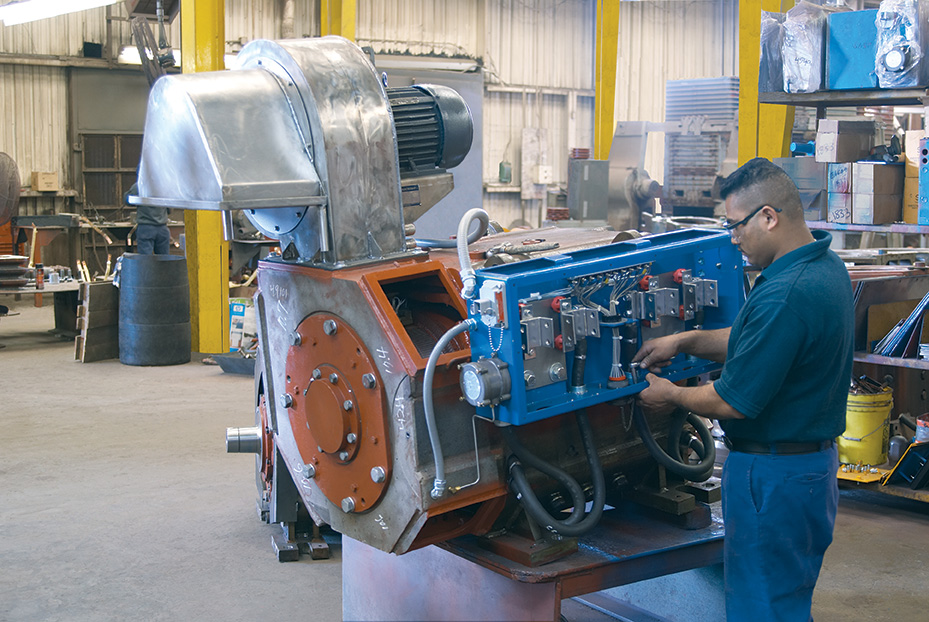
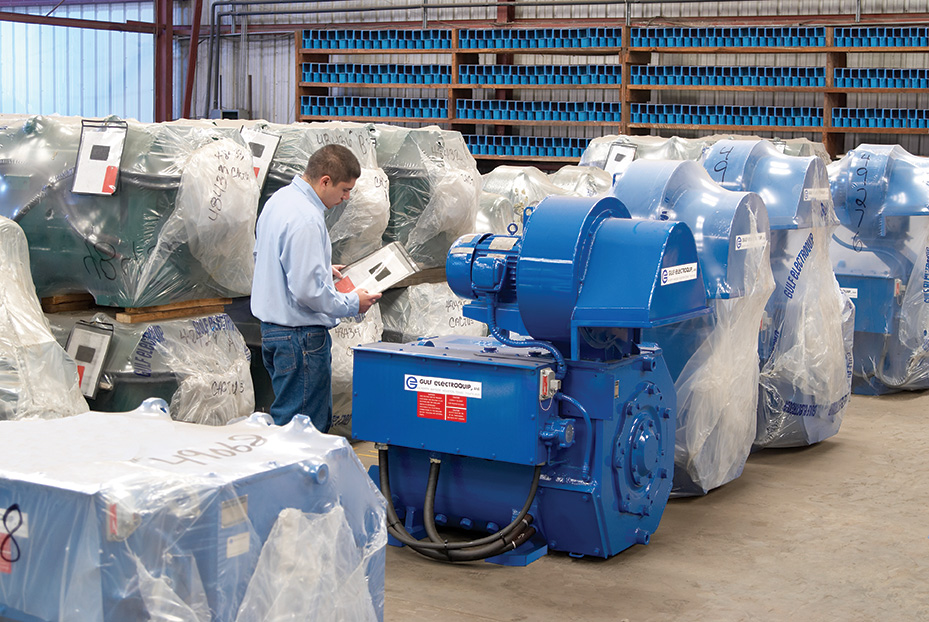
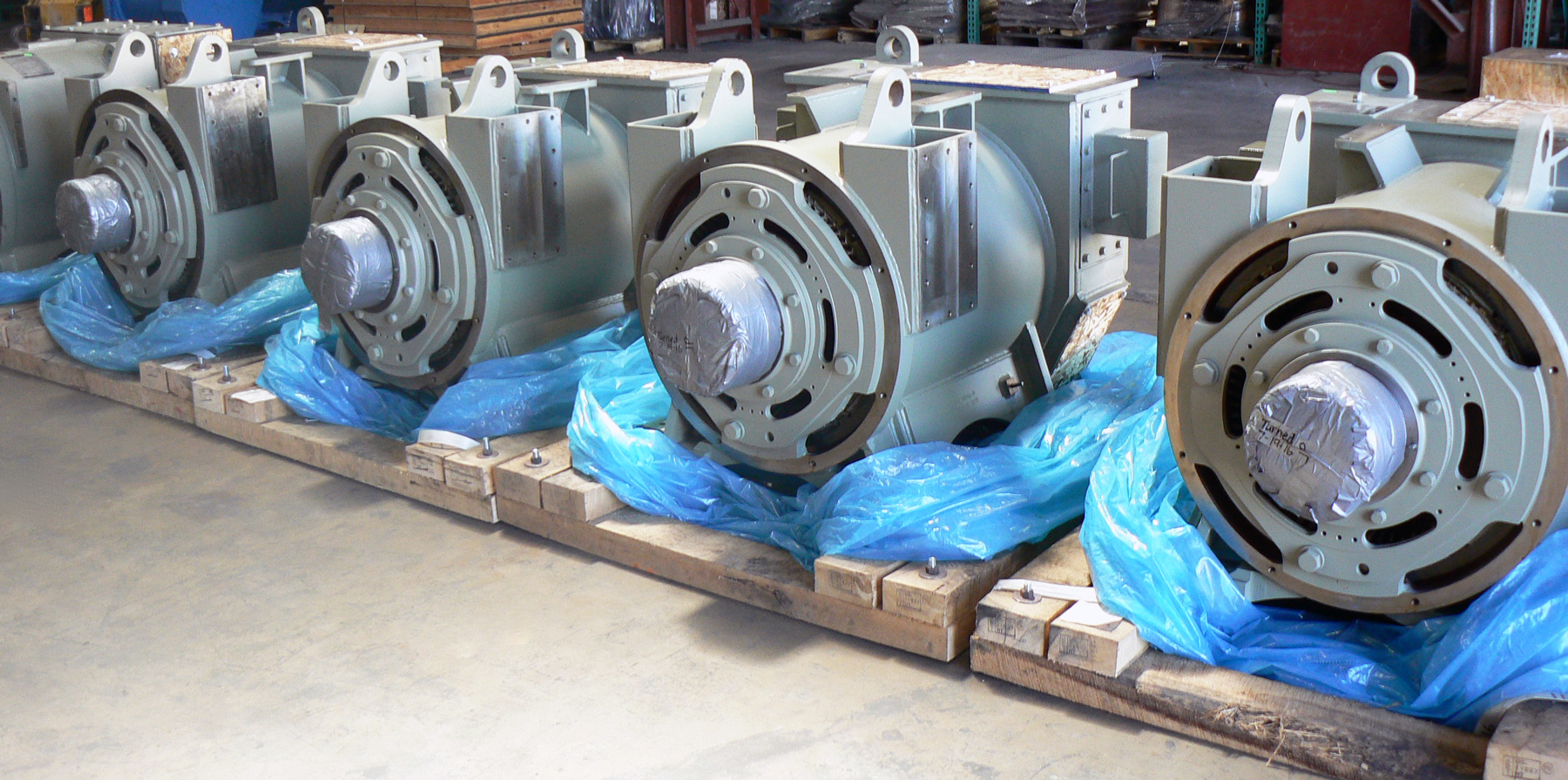
Gulf Electroquip remanufactures AC and DC motors for drilling motors, traction motors, top drives, drawworks, rotary tables and mud pumps; brands include GE and EMD. Gulf Electroquip also remanufactures AC generators; brands include GE, Kato, WEG, Baylor, Toshiba, CAT, ABB, Reliance, Siemens and others. Gulf Electroquip also remanufactures small AC and DC industrial motors; all brands.

The benefits of a remanufactured motor (vs. brand new or repaired motors) are:
• Remanufactured to brand new specifications
• Same performance as brand new
• Same durability and reliability as brand new
• Same parts and replacement parts as brand new
• Full-load tested and certified to specifications as brand new
• Upgraded features better than original brand new model
• Lower price than brand new
• Ability to extend original capital investment by remanufacturing motor many times over
• Option to customize an entire motor package to match unique customer specifications